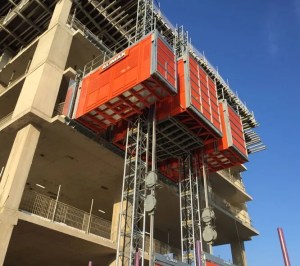
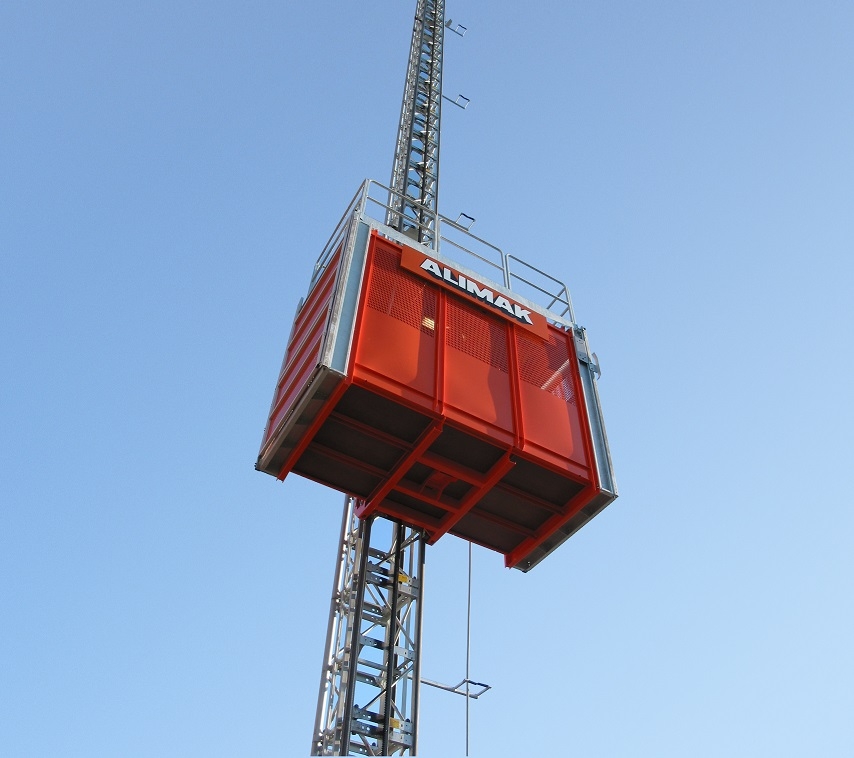
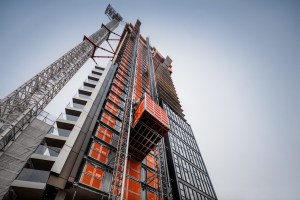
Houston, 15 June 2026.– The conversation around vertical logistics was relegated to the margins of the budget, treated as a necessary but burdensome cost center—a line item where the primary objective was to minimize rental rates or CAPEX. However, as we navigate the complexities of 2026, the paradigm has undergone a radical shift where the hoist is no longer just a piece of iron moving men and materials; it has become a vertical data probe, the nervous system of the high-rise job site. The traditional Return on Investment (ROI) calculation, once based solely on mechanical uptime and lifting capacity, is being replaced by a much more sophisticated “Informatized ROI.”
In this new landscape, the most valuable byproduct of a vertical transportation system isn’t the delivery of a pallet of drywall to the 40th floor—it is the granular, real-time data generated during that cycle. By April 2026, the integration of IoT sensors and edge computing into our Alimak systems allows us to capture the heartbeat of a project, tracking worker movement, material flow velocities, and peak demand periods with surgical precision. When we analyze this data, we aren’t just looking at how fast a car moves; we are identifying the hidden bottlenecks that cause labor stagnation. If telemetry shows that 20% of your workforce is spending 15 minutes waiting for a lift during the morning peak, you aren’t just losing time; you are hemorrhaging margin.
By converting these logistical “black boxes” into transparent data assets, we empower project managers to synchronize crane cycles with hoist movements and delivery schedules, creating a harmonious flow that was previously impossible to orchestrate. This transition from “selling machines” to “provisioning intelligence” presents a significant hurdle for the human side of the business, specifically for the “old school” sales forces that have spent 30 years mastering the mechanical specs of a rack-and-pinion system.
The pivot from a traditional Sales Representative to a Data Consultant is perhaps the most critical HR challenge I face as a Sales Director today. It requires a fundamental deconstruction of the sales pitch; we are moving away from discussing motor kilowatts and floor-call responsiveness to discussing data integration into the project’s Digital Twin. Training a veteran team to speak the language of predictive analytics and BIM-synchronized logistics requires more than just a technical manual—it requires a shift in identity. We are teaching our people to stop looking at the machine and start looking at the dashboard, helping them understand that their role is now to solve the client’s “invisible” problems, such as labor productivity leakages and energy optimization.
In 2026, a successful sales professional in the Americas construction sector must be part engineer, part data scientist, and part management consultant. They must be able to demonstrate to a developer in New York or a contractor in Mexico City that the slightly higher premium for a “smart” hoist is offset tenfold by the reduction in idle man-hours. We are essentially selling a insurance policy against inefficiency. The “Data Asset” model ensures that at the end of a project, the client doesn’t just have a completed building; they have a comprehensive log of every vertical movement, providing a blueprint for how to build the next one even faster.
This is the new frontier of construction management: a world where the physical lift is the commodity, but the data it breathes is the gold. As we look toward the rest of 2026, those who continue to view vertical logistics through the lens of a “Cost Center” will find themselves left behind on the ground floor, while those who embrace the “Data Asset” will be the ones reaching new heights in both productivity and profitability. Which of these technical shifts do you feel is the hardest to communicate to a client who is still focused solely on the bottom-line rental rate?.
- He rise of AI-Agent networks on the interconnected job site
- Solving the 2026 Talent Deficit

- The Vertical Nervous System: Transforming Construction Hoists from Cost Centers to Data Assets
- The Great Re-Shoring: Why Monterrey is the New Chicago

- The Vertical Shift: Optimizing Megacity Development through Automated Transportation Systems
- The Most Expensive Minute on a Jobsite