

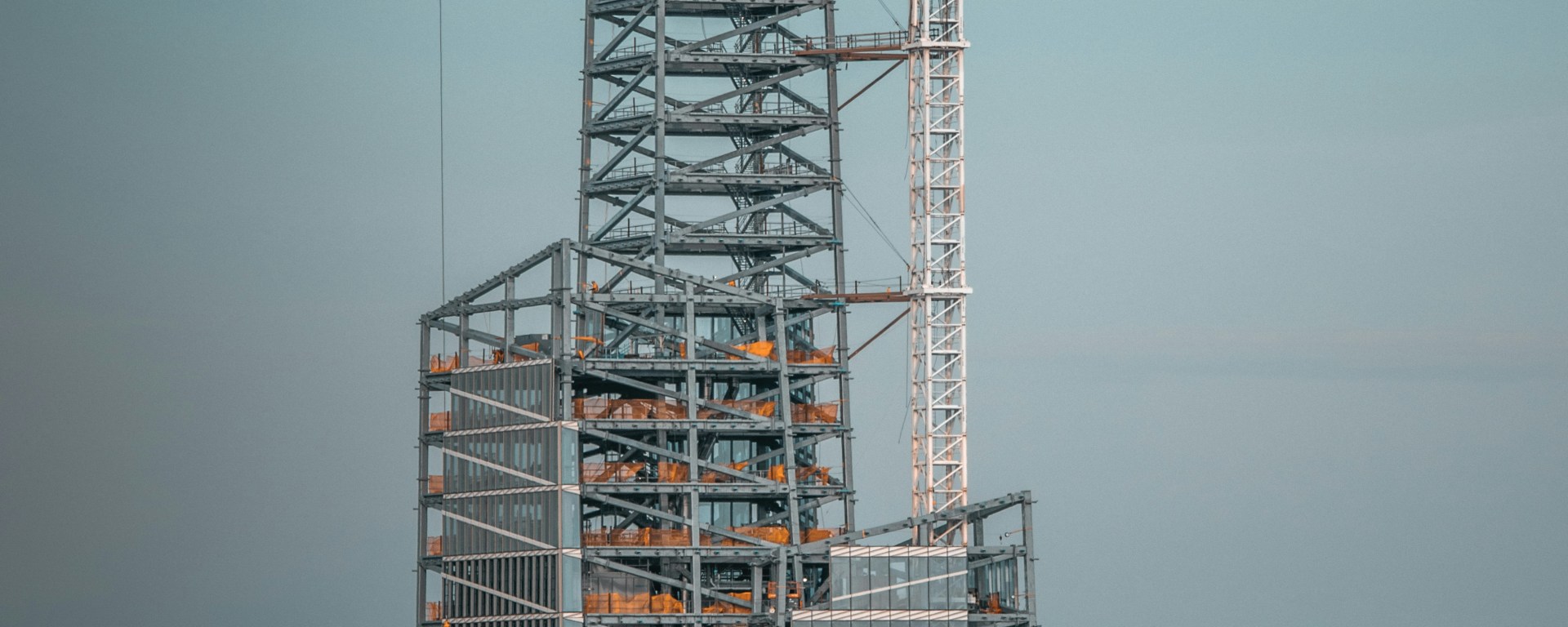
Houston, January 28, 2026.- Over the past two decades working across different construction markets, I have seen firsthand how public and private construction cycles behave very differently. While both are influenced by the broader economy, they respond to distinct drivers, financing structures, and risk dynamics. Understanding these differences is increasingly important as the U.S. construction market navigates a period of structural change and medium-term opportunity.
The United States construction market reflects the broader dynamics of the national economy, shaped by public policy, capital flows, demographic trends, and shifting industry priorities. Among its principal segments, public works and private sector construction follow distinct cycles, financing mechanisms, risk profiles, and growth trajectories. Understanding these differences is essential for stakeholders evaluating opportunities over the next five to seven years.
1. Market Overview: Public vs. Private Construction
The U.S. construction market is traditionally segmented into public infrastructure (transportation, utilities, water systems, schools, federal facilities) and private construction (residential housing, commercial buildings, industrial projects, data centers). Each segment responds to different demand drivers: public works are influenced by government budgets and policy agendas, while private construction is driven by market forces, investment trends, and corporate strategy.
2. Cycle Dynamics and Demand Drivers
Public Works Construction
Public construction is inherently policy-driven and slower to react to economic shifts. Projects often require extensive planning, regulatory approvals, environmental reviews, and long procurement cycles. Accordingly, the public works cycle tends to:
- Lag broader economic trends: Infrastructure spending may accelerate after economic downturns as fiscal policy stimulates recovery.
- Provide counter-cyclical support: Large appropriations for transportation, water systems, and energy resilience often serve as stabilizers when private investment weakens.
- Depend on legislative action: Infrastructure bills and appropriations dictate funding availability, pace of disbursement, and prioritization.
The Infrastructure Investment and Jobs Act (IIJA) and subsequent funding frameworks underscore this dynamic by allocating significant capital toward highways, bridges, broadband, and water systems. However, translating appropriations into ground-breaking activity can span multiple years.
Private Sector Construction
By contrast, private construction is market-sensitive and forward-looking:
- Residential construction responds to interest rates, household formation, and affordability.
- Commercial real estate depends on corporate demand for office, retail, and hospitality space, with sensitivities to economic cycles and technological shifts (e.g., remote work dynamics).
- Industrial and logistics construction is tied to supply chain investments, reshoring, e-commerce growth, and technological adoption.
Private projects typically adjust more rapidly to macroeconomic signals such as inflation, credit conditions, and shifts in consumer and corporate behavior.
3. Financing Mechanisms and Risk Profiles
Public Infrastructure Financing
Public construction financing is anchored in:
- Federal, state, and local budgets: Appropriated funds, bonded debt, and user fees.
- Grants and matching funds: Programs like BUILD, INFRA, and state revolving funds.
- Municipal bonds: Long-term financing instruments, sensitive to credit ratings and interest rates.
Public works financing is generally low-risk for contractors due to the reliability of government payments, but it requires adherence to regulatory standards (Davis-Bacon wages, Buy America provisions, prevailing wage laws) and rigorous compliance procedures.
Private Construction Financing
Private projects rely on:
- Commercial lending: Bank loans, construction financing, and mezzanine debt.
- Equity investors: Institutional capital, REITs, private equity.
- Pre-leases and forward commitments: Particularly in commercial and industrial construction.
Private sector financing is inherently risk-adjusted, with lenders and investors pricing in market volatility, absorption rates, and asset valuations. As a result, rising interest rates or tightening credit can significantly dampen private construction activity.
4. Current Context and Emerging Trends
Several macro trends are shaping the trajectory of both public and private construction:
Inflation and Interest Rates
Persistent inflation and higher interest rates have raised financing costs for both public and private projects. While government issuers may absorb rate impacts over long budgets, private developers face immediate pressure on project feasibility and returns.
Supply Chain and Labor Challenges
Global supply chain disruptions and labor shortages continue to affect project timelines and costs. Public projects, with longer lead times, may partially absorb these challenges, whereas private projects often response by revising scope or delaying starts.
Technological Adoption
Digital tools, modular construction, and automation are gaining traction, especially in private construction where ROI horizons are shorter. Public agencies are increasingly piloting technology to improve efficiency and transparency.
Resilience and Sustainability
Public infrastructure investments increasingly prioritize climate resilience, water security, and electrification. In the private sector, sustainability credentials influence financing terms, tenant demand, and corporate investment decisions.
5. Medium-Term Outlook (2026–2030)
Public Construction Outlook
- Steady growth trajectory supported by legacy infrastructure legislation and ongoing appropriations.
- Accelerating project implementation as state and local agencies deploy federal funding.
- Key Focus areas: surface transportation, water systems, broadband expansion, energy infrastructure, and resilience projects.
- Challenges: workforce capacity, permitting bottlenecks, and intergovernmental coordination.
Overall, public works are positioned for moderate, sustained expansion, acting as a stabilizing force amid economic fluctuations.
Private Construction Outlook
- Residential sector: Moderate growth potential if affordability improves and mortgage rates stabilize.
- Commercial office sector: Continued adjustment to flexible work models may constrain new construction.
- Industrial and logistics: Robust growth driven by e-commerce, expansion, supply chain diversification, and automation.
- Specialized sectors: Data centers and life sciences facilities are likely to continue attracting strong investment due to structural demand.
Private construction will likely show greater dispersion across subsectors, with winners in industrial and tech-aligned segments, and slower activity in office and traditional retail.
6. Strategic Implications for Industry Participants
These dynamics are not merely academic. They have a direct impact on how industry participants position themselves in a changing market.
- Contractors and suppliers should align capabilities with public procurement standards while targeting high growth private subsectors.
- Investors and developers must, recalibrate risk models to interest-rate environments and sector-specific fundamentals.
- Policymakers should prioritize streamlined permitting and workforce development to unlock infrastructure investments.
- Technology adopters will gain competitive advantage through efficiency and data-driven project management.
The U.S. construction market is shaped by fundamentally different cycles in its public and private segments. Public construction offers stability and long-term growth supported by policy initiatives, while private construction remains more sensitive to market sentiment, capital conditions and structural shifts.
Over the medium term, these segments will evolve under the influence of financing costs, labor dynamics, and strategic shifts toward sustainability and technology.
Understanding these differences is critical for sound decision-making. Industry leaders who recognize the distinct cycles, financing structures, and risk profiles of public and private construction will be better positioned to manage uncertainty and capture opportunities in an increasingly complex and dynamic market.
 LUÍS MORRAL, Sales Director - Americas Construction at ALIMAK GROUP
You must be logged in to post a comment.